Tampilkan postingan dengan label protest and accommodation. Tampilkan semua postingan

Rabu, 21 November 2012

Protest and Accommodation: A false dichotomy

I taught the conflict between W. E. B. Du Bois and Booker T. Washington three times this semester. Once in my African American history class and once each in my two Paideia classes, when we were reading The Souls of Black Folk. When I encouraged students to understand the difference between protest and accommodation, I was struck by a couple of things. First, I remembered my own efforts in graduate school to move beyond this discussion because it struck me as a false dichotomy. Secondly, students really liked it and understood it precisely because it is so simple. And almost to a person in Paideia, they all argued on behalf of Du Bois, except for the few who suggested that if Du Bois and Washington had just gotten along, the black freedom struggle would have accomplished so much more.


I recently asked H-AfroAm where the literature is on Protest and Accommodation. For the most part, the few responders agreed that it was a false dichotomy. Even that fact that only a couple of people responded suggests that this is not an issue that raises interest. In my own investigation of the historiography, I was struck by Cornel West's 1982 declaration,

“The Du Bois-Washington debate set the framework for inclusionary African practices in the United States in this century. The numerous black ideological battles between integrationism and nationalism, accommodationism and separatism are but versions and variations of the Du Bois-Washington debate. For example, Marcus Garvey, the great Jamaican leader of the first mass movement among Africans in the United States, simply gave Washington’s self-help orientation a nationalist slant and back-to-Africa twist; his personal admiration of Washington is indisputable." (89) ...
The dominance of the ideology has ended because

"The postmodern period has rendered the framework of the Du Bois-Washington debate obsolete, but presently there is little theory and praxis to fill the void."(93)
I think that this obsolescence of the framework is partly what is influencing modern historiography. My assertion, in contrast, is that if this duality energized debate among African Americans and I find evidence of that energy in the primary sources, I can use the debate to frame my research, as long as I recognize that lived practice was necessarily different from stated ideology and that even ideology did not break down so easily into each camp as undergrads would wish.

Rabu, 07 November 2012

New Direction for my book

I'm excited. I've decided to take my book in a new direction, which will have a stronger argumentative hook and utilize more of the research I've done (demanding less further research, though it still requires extensive editing).


For a long time, my book has been titled "A Spirit of Compromise and Protest" but the subtitle has been "The Internationalism of African American Women in the Interwar Period." This book focused on four sorority sisters from New York, who were all abroad in 1928--Yolande Du Bois-Cullen in Paris on her "honeymoon", Mabel Byrd in Geneva, Juliette Derricotte in Mysore, India, and Eslanda Robeson in London (and later, the USSR and Africa). This was a wonderful topic--it gave me almost the whole world and allowed me to investigate four different types of internationalism, tourism, communism, Christianity, and Pan-Africanism. But I didn't have a thesis. I just had a topic. And I needed to write the chapters on Robeson and Du Bois-Cullen (I've done much of the research on their chapters, and some pre-writing, but the writing has been elusive).

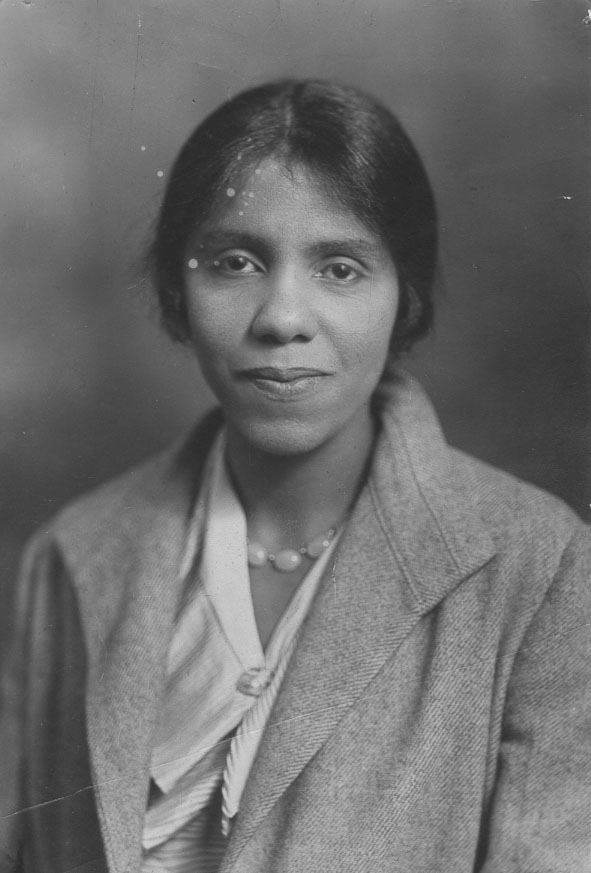
Juliette Derricotte
So I'm going to drop Robeson and Du Bois-Cullen and instead focus on Byrd and Derricotte women who articulated a gendered understanding of the protest/accommodation dichotomy (or in T.J. Jackson Lear's formulation in No Place of Grace--the dialectic between these two). That way, I will include more of their lives than just their international journeys, including their time at Fisk, where they came into conflict over protesting against or compromising with the white president, Thomas Elsa Jones. This story made up my recent article. I will argue that Derricotte's understanding of compromise was qualitatively different (though in the same family) as Washington's idea of accommodation.

This will also be more explicitly an intellectual history because I will need to chart the evolution of the protest/accommodation divide both within black thought and within the historiography. A quick attempt to update me on the literature shows that this divide is in a lot of standard/reference sources (and so a "given" in current society?), but not necessarily in recent historiography. I know Robert Norrill in his 2009 book Up from History reconsiders Washington's role as an accommodationist, but I'm curious as to how other works have stretched interpretations of the divide. In addition to the Du Bois/Washington conflict, Gunnar Myrdal used the two categories to describe all black leaders.

My work will both challenge the dichotomy as over-simplified, particularly within individual people's lives, while also recognizing it as a trend within black thought. A quick search in Project Muse suggests that Pauline Hopkins inhabited protest in response to Washington's accommodation. But searching for just "protest accommodation" leads to myriad sources not actually on the topic itself.

I'm curious if you've read anything recently in black history or intellectual history that updates the historiography on protest/accommodation? Or genders the idea? [another recent article suggests that a white woman politician was an accommodationist]