Couple of interesting things happened last week that I thought I'd share with ya'll.
1. First day of a USIH class, I asked what an "intellectual" was. First answer--dead white guys--second and third answers agreed. I asked if they all agreed with that. Silence. Till one brave student suggested that he thought Du Bois might be considered an intellectual. Then a kid in the back started to talk about how different people groups might have esteemed different individuals (he might have said shamans...can't remember...but that was what he was referring to) as in the role of intellectuals. Same student told me later after class, after telling me that he was really going to enjoy this class, that he had wanted to say to the question, "Are all intellectuals dead white guys?" "no, but all the good ones were"....pause...."I'm joking of course!"
Oh, and the last comment of the class was that liberty was more important than equality, because some of us are more equal than others. Literally, said in the last second so I had no time to ask questions of that statement.
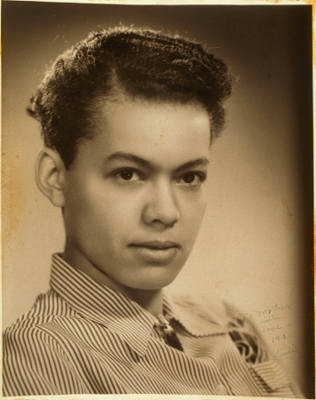
I'm glad I kept as much of an emphasis on race as I did in my class, though I did change the syllabus based on some of ya'lls comments last semester. I wonder what students will think after reading Pauli Murray's autobiography. I come back to the question, though, about my role in the classroom. I am not there to change someone's political point of view, but I am there to ask whoever steps through the classroom door to think more deeply about the subjects I pose. And yet, I cannot help wanting someone who comes in thinking that intellectuals are only dead white men to change their thinking to believe that intellectuals have come and are still coming in all shapes as sizes...and that intellectual history can refer to the kinds of things LD mentioned in her inaugural post as much as it can refer to William James. What subjects are within our purview as professors to attempt to change people's minds about?
2. I presented a portion of my research to the department on Friday. Among other great feedback someone challenged me that I was not doing an "intellectual history" as the subtitle of my talk declared, because....(wait for it)....I was doing a "history of intellectuals, not a history of their ideas." "Do you understand the distinction?" she asked me. I told her about this blog and suggested that we were redefining the idea of intellectual history to include, among other things, the lived experience of intellectuals. She had objected to me talking about what intellectuals did rather than what they thought.
3. Second day of USIH class, we discussed debates over the causes of the Civil War. I originally pondered this topic here. I also introduced them to Frederick Douglass and Ta-Nehisi Coates, neither white and one of whom is not dead. There was an undercurrent of agreement that the Civil War was not justified, not quite because of Lost Cause mentality, but because it didn't immediately lead to equality for black people. This is a smart group of undergrads who have remembered a lot from prior classes. It's going to be fun to challenge them with dense readings. The discussions are already rich with nuance.
Tampilkan postingan dengan label Civil War. Tampilkan semua postingan
Rabu, 18 Januari 2012
Rabu, 07 Desember 2011
Debating the Causes of the Civil War---Pedagogy style
I've been rereading The Metaphysical Club in preparation for teaching US Intellectual History next semester and I noticed something--Menand argues that slavery was not the cause of the civil war, though it became central to the conflict as the war progressed. In African American history, whether or not you consider slavery to be the primary cause of the civil war reflects upon your seriousness of purpose and dedication to the field (i.e. it is argued that slavery was most definitely the cause of the Civil War). I've decided to use The Metaphysical Club as a jumping off point for a debate about this with my class.
But, hmmmm, what is "this"--is it the history of the way that the cause of the Civil War have been debated, or the causes themselves? Which is more important to discuss with students? When we teach intellectual history, does it behoove us to talk about the birth of an idea and its aftermath all in one day, or stretch it out across the semester? (I ask, because I am contemplating playing this episode of "Backstory" about "Evolution and Creation" in America for my students, but it discusses centuries of science in one hour, rather than discussing the first introduction of Darwin to the US as I had planned.)
To decide which "this" (causes or debate of causes) to discuss, let me first quote Menand:
Ta-Nehisi Coates has been debating the causes of the Civil War on his blog for months, in preparation for a book he is writing. The debate has culminated in an article in The Atlantic which captures succinctly the consensus among many historians of African America. He argues that the reining narrative about the causes of the Civil War was created to unite the US by alienating black people.
But, hmmmm, what is "this"--is it the history of the way that the cause of the Civil War have been debated, or the causes themselves? Which is more important to discuss with students? When we teach intellectual history, does it behoove us to talk about the birth of an idea and its aftermath all in one day, or stretch it out across the semester? (I ask, because I am contemplating playing this episode of "Backstory" about "Evolution and Creation" in America for my students, but it discusses centuries of science in one hour, rather than discussing the first introduction of Darwin to the US as I had planned.)
To decide which "this" (causes or debate of causes) to discuss, let me first quote Menand:
"As it had been all along, the issue for most Northerners was not the morality of slavery; it was the balance of power between the North and the South. But the more the South intervened in the North's affairs and frustrated the North's political will, the more corrupt the institution of slavery began to seem. When it was relatively out of sight, slavery could be kept relatively out of mind. The more belligerently the South thrust its business in Northern faces, the more distasteful that business became." (27)
Ta-Nehisi Coates has been debating the causes of the Civil War on his blog for months, in preparation for a book he is writing. The debate has culminated in an article in The Atlantic which captures succinctly the consensus among many historians of African America. He argues that the reining narrative about the causes of the Civil War was created to unite the US by alienating black people.
Our alienation was neither achieved in independence, nor stumbled upon by accident, but produced by American design. The belief that the Civil War wasn’t for us was the result of the country’s long search for a narrative that could reconcile white people with each other, one that avoided what professional historians now know to be true: that one group of Americans attempted to raise a country wholly premised on property in Negroes, and that another group of Americans, including many Negroes, stopped them. In the popular mind, that demonstrable truth has been evaded in favor of a more comforting story of tragedy, failed compromise, and individual gallantry. For that more ennobling narrative, as for so much of American history, the fact of black people is a problem....
The fallen Confederacy’s chroniclers grasped this historiographic challenge and, immediately after the war, began erasing all evidence of the crime—that is to say, they began erasing black people—from the written record.I'd suggest reading the whole article, but I can't help quoting a few more lines:
The 20th century, with its struggles for equal rights, with the triumph of democracy as the ideal in Western thought, proved [Frederick] Douglass right. The Civil War marks the first great defense of democracy and the modern West. Its legacy lies in everything from women’s suffrage to the revolutions now sweeping the Middle East. It was during the Civil War that the heady principles of the Enlightenment were first, and most spectacularly, called fully to account.
In our present time, to express the view of the enslaved—to say that the Civil War was a significant battle in the long war against bondage and for government by the people—is to compromise the comfortable narrative. It is to remind us that some of our own forefathers once explicitly rejected the republic to which they’d pledged themselves, and dreamed up another country, with slavery not merely as a bug, but as its very premise....
In August, I returned to Gettysburg. My visits to battlefields are always unsettling. Repeatedly, I have dragged my family along, and upon arrival I generally wish that I hadn't. Nowhere, as a black person, do I feel myself more of a problem than at these places, premised, to varying degrees, on talking around me. But of all the Civil War battlefields I've visited, Gettysburg now seems the most honest and forward-looking. The film in the visitor center begins with slavery, putting it at the center of the conflict....
For the portion of the country that still honors, or traces its ancestry to, the men who fired on Fort Sumter, and thus brought war, the truthful story of the Civil War tells of a defeat richly deserved, garnered in a pursuit now condemned. For the blameless North, it throws up the failed legacy of appeasement of slaveholders, the craven willingness to bargain on the backs of black people, and the unwillingness, in the Reconstruction years, to finish what the war started.I should note that Menand does traces the "blameless North" side of that statement, without the same kind of moral conviction that Coates has about the evils of slavery. Menand seems to feel sympathy for the northerners who were exhausted by war and the moral certitude that took them there and thus did not fight to assure that the freed slaves would have some amount of their freedom preserved.
“The lesson Holmes took from the war [and never modified] can be put into a sentence. It is that certitude leads to violence.” (61) “Abolitionism came to stand in his thought for the kind of superior certitude that drives men (frequently men other than the ones who are certain) to kill one another.” “Still Holmes did not think that the world would be better off without people like this, because he thought that everyone was like this” (62)It is strange, as Coates points out, that it was Abolitionism that Holmes blamed for causing violence instead of the violence already existing within slavery that the war attempted to put an end to. Coates writes,
The Confederate army, during its march into Pennsylvania, routinely kidnapped blacks and sold them south. By the time Lee’s legions arrived in Gettysburg, virtually all of the town’s free blacks had hidden or fled. On the morning of July 3, General George Pickett’s division prepared for its legendary charge. Nearby, where the Union forces were gathered, lived Abraham Brien, a free black farmer who rented out a house on his property to Mag Palmer and her family. One evening before the war, two slave-catchers had fallen upon Palmer as she made her way home. (After the passage of the Fugitive Slave Act, slave-catchers patrolled the North, making little distinction between freeborn blacks and runaways.) They bound her hands, but with help from a passerby, she fought them off, biting off a thumb of one of the hunters.
Faulkner famously wrote of Pickett’s Charge:
Personally, I agree with Coates, but I think it would make sense in an intellectual history course to examine the debate, rather than the causes themselves. Perhaps I will ask students to read the Coates articles in addition to the first section of Menand's book (we are reading it in chunks) and then hold a discussion. Do you all have suggestions for high points within the "causes of the Civil War" debate, which Coates does not mention?For every Southern boy fourteen years old, not once but whenever he wants it, there is the instant when it’s still not yet two o’clock on that July afternoon in 1863 … and it’s all in the balance, it hasn’t happened yet, it hasn’t even begun yet … That moment doesn’t need even a fourteen-year-old boy to think This time.These “Southern boys,” like Catton’s “people,” are all white. But I, standing on Brien’s property, standing where Mag Palmer lived, saw Pickett’s soldiers charging through history, in wild pursuit of their strange birthright—the license to beat and shackle women under the cover of night. That is all of what was “in the balance,” the nostalgic moment’s corrupt and unspeakable core.
Senin, 11 April 2011
Forgetting Anniversaries
| Medal Produced by the Civil War Centennial Commission, 1961 |
Readers of this blog in their mid-to-late fifties or older might remember the previous, major national celebration of our nation's past: the Centennial of the Civil War. Created by act of Congress in 1957, the Civil War Centennial Commission oversaw a national commemoration of that conflict that was more deeply troubled than the later Bicentennial effort.
This year, the nation faces two major historical anniversaries: this week marks the beginning of the Sesquicentennial of the Civil War. And five months from today will be the tenth anniversary of 9/11. Yet it appears that neither of these anniversaries may receive the sort of unified national commemoration that our federal government provided for the nation's Bicentennial and the Civil War Centennial. What, if anything, should we make of this apparent refusal to commemorate?
I
In the words of the historian Robert Cook, author of Troubled Commemoration: The American Civil War Centennial, 1961-1965 (LSU Press, 2007), the national celebration of the Civil War's centennial "came close to being an unmitigated disaster." The Centennial fell at arguably the most difficult time for such a celebration, with the Civil Rights movement in full swing and Southern states turning to the legacy of the Confederacy for rhetorical ammunition as they pursued massive resistance to integration. The Civil War Centennial Commission, led by Gen. Ullyses S. Grant III and Karl S. Betts, embraced a by-then hoary view of the conflict as a "brothers' war," a narrative that ignored African American agency, marginalized the issue of slavery, and celebrated the conflict as a tragic but ultimately heroic tale of an essentially white nation reuniting. Thus the CWCC found itself deeply out-of-step with both African American and Southern white contemporary memory of the conflict. It only became a flashpoint of national controversy, however, when at its 1961 annual meeting in Charleston, SC, the New Jersey delegation precipitated a crisis by demanding, over the objections of Grant and Betts, that one of its African American delegates be given a room at the segregated hotel at which the meeting was taking place.
Writing on HNN in 2007, the fiftieth anniversary of the creation of the CWCC, Robert Cook recalled the failures of the CWCC and gave advice for those planning national Sesquicentennial celebrations. Cook seems to simply have assumed that such celebrations would take place. But in fact, Congress has never authorized a national Civil War Sesquicentennial Commission, despite repeated attempts at its creation. Indeed, as far as I can tell, it's never even become a serious enough possibility to create a major public debate about it. The latest attempt, launched in the House this February, has foundered, in part due to the current bipartisan mania for budget cutting. The Obama Administration, disappointingly but utterly unsurprisingly, has been utterly silent about the Sesquicentennial. Though a number of states, localities, and private organizations have launched their own Sesquicentennial commemoration efforts--and some of these have made national news, largely for negative reasons--it now appears that there will be no high-profile national commemoration whatsoever.
Not that the federal government is entirely ducking this anniversary. The National Park Service, steward of the most important battle sites, has a website devoted to the Sesquicentennial, which features events "Then" (currently Congress adjourning with the nation divided on March 28, 1861) and "Now" (bizarrely Strom Thurmond filibustering the Civil Rights Act of 1957....which doesn't seem very much like "now" to me, unless the NPS is engaged in an ironic and very surprisingly critical stance on the current functioning of our Senate). And the Library of Congress is quietly archiving websites devoted to the commemoration of the Sesquicentennial, though as far as I can tell, they haven't made any effort to publicize this on their own website.
What accounts for the failure to mount a more robust national commemoration?
II
Surely the problem isn't a lack of national interest. Along with World War II, the Civil War remains the single event in our nation's past that most interests the general public. Civil war reenactment--an activity that is in many ways a legacy of the Centennial celebration--continues to attract a large and enthusiastic group of participants. And less demanding forms of Civil War memory are even more popular.
Nor is the problem the absence of a viable national story about the war. If anything, reaching consensus on the meaning of the war seems more likely in 2011 than in 1961. As Cook noted in his 2007 HNN piece, wildly popular works like Jim McPherson's Battle Cry of Freedom and Ken Burns's Civil War have forged "a liberalized version of the brothers’ war/national salvation trope, one that incorporates the political achievements of the war (emancipation as well as Union) but still attempts to find evidence of national purpose and greatness." Though four years ago Cook argued that overcoming this new narrative was the first great challenge of the Sesquicentennial effort, the existence of this narrative would seem to form the basis of a national celebration, however inadequate Cook might find it to be. (Though I may be biased having studied with him, it seems to me that one can do a lot worse than Jim McPherson's understanding of the conflict.)
More positively, Kevin Levin, high school history teacher and author of Civil War Memory (winner of the 2007 Cliopatria for Best Individual Blog), argues that what he calls the "Continuing War Narrative" about Civil War memory is very overdrawn:
The sesquicentennial commissions of former Confederate states are engaged in activities that would have been impossible to imagine 50 years ago. Museums and other historical institutions throughout the nation are presenting the general public with programs that introduce the latest Civil War scholarship.
. . . I’m not suggesting that some kind of victory be declared over the interpretive problems that have plagued Civil War historiography and, by extension, the form it took in popular culture, but we would do well to acknowledge the changes. We should do so if only to more precisely point out the gaps and distortions that persist.In short, there are still problems, but the public memory of the Civil War seems healthier and, if anything, less divided than it's ever been before.
III
Perhaps this refusal to forge a national commemoration of the Sesquicentennial is nonetheless a result of what Dan Rodgers calls the "Age of Fracture" (you didn't think I was going to get through this post without mentioning USIH's current scholarly obsession, did you?). Rodgers does write about the weakening of "civil religion," once so strong in Cold War America. And, indeed, Robert Cook argues that the Centennial celebration was deeply linked to the sort of Cold War cultural and political imperatives that Rodgers argues began to fade in the 1970s.
But while Rodgers's account of national efforts to deal with important historical anniversaries shows fragmentation--from relative unity over the Bicentennial in the 1970s to "history wars" over Columbus and the Enola Gay in the 1990s--there's little in his narrative that would lead us to expect our federal government's withdrawing from such commemoration entirely.
Indeed, Rodgers devotes his final chapter to the growing importance--and often illusory immediacy--of the past in the late twentieth century:
As the very language for society threatened to break into fragments, the past became a sphere unto which desires for community and cohesion could be projected. A truly changeless society would have no need to dwell on its history. In contrast, a sense of living within fragmenting and accelerating time made history a point of acute importance. (p. 221)Although Rodgers focuses on the 1980s and 1990s in this chapter (entitled "Wrinkles in Time"), I don't think our culture has entirely abandoned this sense of the past as both crucial and immediate.* For example, "Wrinkles in Time" made think repeatedly of the Tea Party's invocations of the American Revolution (which David has previously discussed on this blog).**
Far from avoiding arguments about history, the American public and American politicians of the "Age of Fracture" tended to leap at the chance to enter the fray.
IV
Which brings us to this year's second major anniversary. If Congress and the White House can effectively duck dealing with this week's arrival of the Civil War Sesquicentennial, they will not be able to ignore 9/11/11. But in many ways, this anniversary will be much more difficult to commemorate than the Civil War. Civil War commemoration is, after all, a decades-old, multi-million dollar industry. And, as noted above, despite generations of division over the meaning of the Civil War, there's a handy, reasonably accurate narrative around which a national commemoration could be built.
9/11 is very different. Despite early insistence the event "changed everything" and brought the American nation together, as Dan Rodgers correctly suggests in the epilogue to Age of Fracture, this moment of national unification was very short lived. In our national elections of 2002, 2004, and 2006, 9/11 was repeatedly invoked for partisan political purposes. Only the utter failure of Rudy Giuliani's presidential aspirations served to partially discourage a Republican return to this political well in 2008. Last year's controversy over the "Ground Zero Mosque" suggests that this bloody shirt can--and will--continue to be waved.
Any attempt to avoid recognizing the anniversary of 9/11 will be subject to intense public criticism...as will any particular attempt to recognize it. The failure to create a robust federal commemoration of the tenth anniversary of 9/11 is thus both more understandable and less tenable than the avoidance of the Civil War Sesquicentennial.
The private developers of the National 9/11 Memorial and Museum are planning to open their memorial at Ground Zero on September 11, 2011. Given the importance of this site, the Memorial opening will undoubtedly be a centerpiece of our national commemoration.
What that national commemoration will look like is unclear, though my guess is that there are people--perhaps dozens of people--in the West Wing and the Capitol busily working on it.
This will be one anniversary that our political leaders will not be able to forget.
_________________________________________________________
* In the interest of full disclosure I should add that, at least in my first reading of Age of Fracture, "Wrinkles in Time" was probably my least favorite chapter in this terrific book. I felt that Rodgers's extremely evocative metaphors about the "folding" and "short-circuiting" of time too often substituted for more precise analysis of what linked the various views of the past that he discusses in this chapter. Nevertheless, as with the rest of the book, there's a lot of value in it, as my discussion above suggests.
** It is interesting that the Tea Party's rhetoric is so focused on the Revolution and tends to avoid the Civil War. Perhaps this is because the politics of the Tea Party challenges the legacy of the Civil War in important ways. To everyone's surprise (I think), nullification has made a comeback among our state legislatures. While a certain Neo-Confederate understanding of the "War Between the States" was extremely useful for white Southern opponents of the black freedom struggle in the Fifties and Sixties, for a variety of reasons, the Civil War--even in its more mythic forms--may provide a less usable past for the Tea Party. Just as Tea Partiers are at pains to deemphasize their connections to the Christian Right, they find themselves repeatedly defending themselves against the charge that their objections to Obama concern race. This may lead them to avoid invoking an event that now seems to most Americans to have been about race.
Forgetting Anniversaries
| Medal Produced by the Civil War Centennial Commission, 1961 |
Readers of this blog in their mid-to-late fifties or older might remember the previous, major national celebration of our nation's past: the Centennial of the Civil War. Created by act of Congress in 1957, the Civil War Centennial Commission oversaw a national commemoration of that conflict that was more deeply troubled than the later Bicentennial effort.
This year, the nation faces two major historical anniversaries: this week marks the beginning of the Sesquicentennial of the Civil War. And five months from today will be the tenth anniversary of 9/11. Yet it appears that neither of these anniversaries may receive the sort of unified national commemoration that our federal government provided for the nation's Bicentennial and the Civil War Centennial. What, if anything, should we make of this apparent refusal to commemorate?
I
In the words of the historian Robert Cook, author of Troubled Commemoration: The American Civil War Centennial, 1961-1965 (LSU Press, 2007), the national celebration of the Civil War's centennial "came close to being an unmitigated disaster." The Centennial fell at arguably the most difficult time for such a celebration, with the Civil Rights movement in full swing and Southern states turning to the legacy of the Confederacy for rhetorical ammunition as they pursued massive resistance to integration. The Civil War Centennial Commission, led by Gen. Ullyses S. Grant III and Karl S. Betts, embraced a by-then hoary view of the conflict as a "brothers' war," a narrative that ignored African American agency, marginalized the issue of slavery, and celebrated the conflict as a tragic but ultimately heroic tale of an essentially white nation reuniting. Thus the CWCC found itself deeply out-of-step with both African American and Southern white contemporary memory of the conflict. It only became a flashpoint of national controversy, however, when at its 1961 annual meeting in Charleston, SC, the New Jersey delegation precipitated a crisis by demanding, over the objections of Grant and Betts, that one of its African American delegates be given a room at the segregated hotel at which the meeting was taking place.
Writing on HNN in 2007, the fiftieth anniversary of the creation of the CWCC, Robert Cook recalled the failures of the CWCC and gave advice for those planning national Sesquicentennial celebrations. Cook seems to simply have assumed that such celebrations would take place. But in fact, Congress has never authorized a national Civil War Sesquicentennial Commission, despite repeated attempts at its creation. Indeed, as far as I can tell, it's never even become a serious enough possibility to create a major public debate about it. The latest attempt, launched in the House this February, has foundered, in part due to the current bipartisan mania for budget cutting. The Obama Administration, disappointingly but utterly unsurprisingly, has been utterly silent about the Sesquicentennial. Though a number of states, localities, and private organizations have launched their own Sesquicentennial commemoration efforts--and some of these have made national news, largely for negative reasons--it now appears that there will be no high-profile national commemoration whatsoever.
Not that the federal government is entirely ducking this anniversary. The National Park Service, steward of the most important battle sites, has a website devoted to the Sesquicentennial, which features events "Then" (currently Congress adjourning with the nation divided on March 28, 1861) and "Now" (bizarrely Strom Thurmond filibustering the Civil Rights Act of 1957....which doesn't seem very much like "now" to me, unless the NPS is engaged in an ironic and very surprisingly critical stance on the current functioning of our Senate). And the Library of Congress is quietly archiving websites devoted to the commemoration of the Sesquicentennial, though as far as I can tell, they haven't made any effort to publicize this on their own website.
What accounts for the failure to mount a more robust national commemoration?
II
Surely the problem isn't a lack of national interest. Along with World War II, the Civil War remains the single event in our nation's past that most interests the general public. Civil war reenactment--an activity that is in many ways a legacy of the Centennial celebration--continues to attract a large and enthusiastic group of participants. And less demanding forms of Civil War memory are even more popular.
Nor is the problem the absence of a viable national story about the war. If anything, reaching consensus on the meaning of the war seems more likely in 2011 than in 1961. As Cook noted in his 2007 HNN piece, wildly popular works like Jim McPherson's Battle Cry of Freedom and Ken Burns's Civil War have forged "a liberalized version of the brothers’ war/national salvation trope, one that incorporates the political achievements of the war (emancipation as well as Union) but still attempts to find evidence of national purpose and greatness." Though four years ago Cook argued that overcoming this new narrative was the first great challenge of the Sesquicentennial effort, the existence of this narrative would seem to form the basis of a national celebration, however inadequate Cook might find it to be. (Though I may be biased having studied with him, it seems to me that one can do a lot worse than Jim McPherson's understanding of the conflict.)
More positively, Kevin Levin, high school history teacher and author of Civil War Memory (winner of the 2007 Cliopatria for Best Individual Blog), argues that what he calls the "Continuing War Narrative" about Civil War memory is very overdrawn:
The sesquicentennial commissions of former Confederate states are engaged in activities that would have been impossible to imagine 50 years ago. Museums and other historical institutions throughout the nation are presenting the general public with programs that introduce the latest Civil War scholarship.
. . . I’m not suggesting that some kind of victory be declared over the interpretive problems that have plagued Civil War historiography and, by extension, the form it took in popular culture, but we would do well to acknowledge the changes. We should do so if only to more precisely point out the gaps and distortions that persist.In short, there are still problems, but the public memory of the Civil War seems healthier and, if anything, less divided than it's ever been before.
III
Perhaps this refusal to forge a national commemoration of the Sesquicentennial is nonetheless a result of what Dan Rodgers calls the "Age of Fracture" (you didn't think I was going to get through this post without mentioning USIH's current scholarly obsession, did you?). Rodgers does write about the weakening of "civil religion," once so strong in Cold War America. And, indeed, Robert Cook argues that the Centennial celebration was deeply linked to the sort of Cold War cultural and political imperatives that Rodgers argues began to fade in the 1970s.
But while Rodgers's account of national efforts to deal with important historical anniversaries shows fragmentation--from relative unity over the Bicentennial in the 1970s to "history wars" over Columbus and the Enola Gay in the 1990s--there's little in his narrative that would lead us to expect our federal government's withdrawing from such commemoration entirely.
Indeed, Rodgers devotes his final chapter to the growing importance--and often illusory immediacy--of the past in the late twentieth century:
As the very language for society threatened to break into fragments, the past became a sphere unto which desires for community and cohesion could be projected. A truly changeless society would have no need to dwell on its history. In contrast, a sense of living within fragmenting and accelerating time made history a point of acute importance. (p. 221)Although Rodgers focuses on the 1980s and 1990s in this chapter (entitled "Wrinkles in Time"), I don't think our culture has entirely abandoned this sense of the past as both crucial and immediate.* For example, "Wrinkles in Time" made think repeatedly of the Tea Party's invocations of the American Revolution (which David has previously discussed on this blog).**
Far from avoiding arguments about history, the American public and American politicians of the "Age of Fracture" tended to leap at the chance to enter the fray.
IV
Which brings us to this year's second major anniversary. If Congress and the White House can effectively duck dealing with this week's arrival of the Civil War Sesquicentennial, they will not be able to ignore 9/11/11. But in many ways, this anniversary will be much more difficult to commemorate than the Civil War. Civil War commemoration is, after all, a decades-old, multi-million dollar industry. And, as noted above, despite generations of division over the meaning of the Civil War, there's a handy, reasonably accurate narrative around which a national commemoration could be built.
9/11 is very different. Despite early insistence the event "changed everything" and brought the American nation together, as Dan Rodgers correctly suggests in the epilogue to Age of Fracture, this moment of national unification was very short lived. In our national elections of 2002, 2004, and 2006, 9/11 was repeatedly invoked for partisan political purposes. Only the utter failure of Rudy Giuliani's presidential aspirations served to partially discourage a Republican return to this political well in 2008. Last year's controversy over the "Ground Zero Mosque" suggests that this bloody shirt can--and will--continue to be waved.
Any attempt to avoid recognizing the anniversary of 9/11 will be subject to intense public criticism...as will any particular attempt to recognize it. The failure to create a robust federal commemoration of the tenth anniversary of 9/11 is thus both more understandable and less tenable than the avoidance of the Civil War Sesquicentennial.
The private developers of the National 9/11 Memorial and Museum are planning to open their memorial at Ground Zero on September 11, 2011. Given the importance of this site, the Memorial opening will undoubtedly be a centerpiece of our national commemoration.
What that national commemoration will look like is unclear, though my guess is that there are people--perhaps dozens of people--in the West Wing and the Capitol busily working on it.
This will be one anniversary that our political leaders will not be able to forget.
_________________________________________________________
* In the interest of full disclosure I should add that, at least in my first reading of Age of Fracture, "Wrinkles in Time" was probably my least favorite chapter in this terrific book. I felt that Rodgers's extremely evocative metaphors about the "folding" and "short-circuiting" of time too often substituted for more precise analysis of what linked the various views of the past that he discusses in this chapter. Nevertheless, as with the rest of the book, there's a lot of value in it, as my discussion above suggests.
** It is interesting that the Tea Party's rhetoric is so focused on the Revolution and tends to avoid the Civil War. Perhaps this is because the politics of the Tea Party challenges the legacy of the Civil War in important ways. To everyone's surprise (I think), nullification has made a comeback among our state legislatures. While a certain Neo-Confederate understanding of the "War Between the States" was extremely useful for white Southern opponents of the black freedom struggle in the Fifties and Sixties, for a variety of reasons, the Civil War--even in its more mythic forms--may provide a less usable past for the Tea Party. Just as Tea Partiers are at pains to deemphasize their connections to the Christian Right, they find themselves repeatedly defending themselves against the charge that their objections to Obama concern race. This may lead them to avoid invoking an event that now seems to most Americans to have been about race.
Jumat, 08 April 2011
Exploring "Confederate Minds"
Below of a Vimeo of University of Miami Professor Michael Bernath talking about his new book, Confederate Minds: The Struggle for Intellectual Independence in the Civil War South (University of North Carolina Press, 2010). - TL
Exploring "Confederate Minds"
Below of a Vimeo of University of Miami Professor Michael Bernath talking about his new book, Confederate Minds: The Struggle for Intellectual Independence in the Civil War South (University of North Carolina Press, 2010). - TL
Langganan:
Postingan (Atom)