Rabu, 18 Januari 2012
pages from my life as an intellectual historian
1. First day of a USIH class, I asked what an "intellectual" was. First answer--dead white guys--second and third answers agreed. I asked if they all agreed with that. Silence. Till one brave student suggested that he thought Du Bois might be considered an intellectual. Then a kid in the back started to talk about how different people groups might have esteemed different individuals (he might have said shamans...can't remember...but that was what he was referring to) as in the role of intellectuals. Same student told me later after class, after telling me that he was really going to enjoy this class, that he had wanted to say to the question, "Are all intellectuals dead white guys?" "no, but all the good ones were"....pause...."I'm joking of course!"
Oh, and the last comment of the class was that liberty was more important than equality, because some of us are more equal than others. Literally, said in the last second so I had no time to ask questions of that statement.
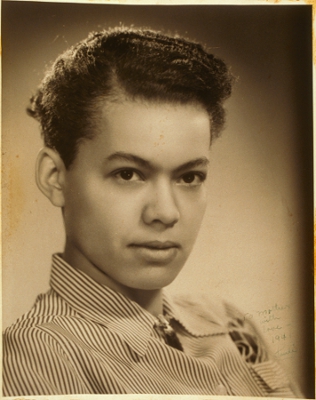
I'm glad I kept as much of an emphasis on race as I did in my class, though I did change the syllabus based on some of ya'lls comments last semester. I wonder what students will think after reading Pauli Murray's autobiography. I come back to the question, though, about my role in the classroom. I am not there to change someone's political point of view, but I am there to ask whoever steps through the classroom door to think more deeply about the subjects I pose. And yet, I cannot help wanting someone who comes in thinking that intellectuals are only dead white men to change their thinking to believe that intellectuals have come and are still coming in all shapes as sizes...and that intellectual history can refer to the kinds of things LD mentioned in her inaugural post as much as it can refer to William James. What subjects are within our purview as professors to attempt to change people's minds about?
2. I presented a portion of my research to the department on Friday. Among other great feedback someone challenged me that I was not doing an "intellectual history" as the subtitle of my talk declared, because....(wait for it)....I was doing a "history of intellectuals, not a history of their ideas." "Do you understand the distinction?" she asked me. I told her about this blog and suggested that we were redefining the idea of intellectual history to include, among other things, the lived experience of intellectuals. She had objected to me talking about what intellectuals did rather than what they thought.
3. Second day of USIH class, we discussed debates over the causes of the Civil War. I originally pondered this topic here. I also introduced them to Frederick Douglass and Ta-Nehisi Coates, neither white and one of whom is not dead. There was an undercurrent of agreement that the Civil War was not justified, not quite because of Lost Cause mentality, but because it didn't immediately lead to equality for black people. This is a smart group of undergrads who have remembered a lot from prior classes. It's going to be fun to challenge them with dense readings. The discussions are already rich with nuance.
Minggu, 31 Januari 2010
Peter Gordon on What Is Intellectual History
Recently I found an essay by Peter Gordon titled “What Is Intellectual History? A Frankly Partisan Introduction to a Frequently Misunderstood Field.” Gordon answers this question by comparing intellectual history to other disciplines: history of ideas, philosophy, political theory, cultural history, and various aspects of sociology. His main point seems to be that intellectual history draws on multitude of methodologies and often overlaps with other disciplines (and he sees this as a good thing). Intellectual history is distinct because as its primary goal is takes the study of ideas and intellectual life. Also, intellectual historians find this study intrinsically interesting. For example, evaluating the relationship between cultural and intellectual history, Gordon writes: “Cultural historians pay attention to ideas mainly because they are seeking evidence for larger patterns of culture; intellectual historians pay attention to ideas for their cultural significance but also because they find the ideas themselves of interest.”
I am curious what others think of Gordon’s assessment of intellectual history? Also, Gordon, who studies European history himself, draws on examples from European intellectual history. I wonder if his essay would be different if Americanist perspectives were included.
Peter Gordon on What Is Intellectual History
Recently I found an essay by Peter Gordon titled “What Is Intellectual History? A Frankly Partisan Introduction to a Frequently Misunderstood Field.” Gordon answers this question by comparing intellectual history to other disciplines: history of ideas, philosophy, political theory, cultural history, and various aspects of sociology. His main point seems to be that intellectual history draws on multitude of methodologies and often overlaps with other disciplines (and he sees this as a good thing). Intellectual history is distinct because as its primary goal is takes the study of ideas and intellectual life. Also, intellectual historians find this study intrinsically interesting. For example, evaluating the relationship between cultural and intellectual history, Gordon writes: “Cultural historians pay attention to ideas mainly because they are seeking evidence for larger patterns of culture; intellectual historians pay attention to ideas for their cultural significance but also because they find the ideas themselves of interest.”
I am curious what others think of Gordon’s assessment of intellectual history? Also, Gordon, who studies European history himself, draws on examples from European intellectual history. I wonder if his essay would be different if Americanist perspectives were included.
Minggu, 29 November 2009
interesting tidbit
US History/Cultural History. The Department of History at the University of Wisconsin-Stevens Point seeks applications for a tenure track, assistant professorship in the field of US History with a specialization in US Cultural History. The ability to teach courses in one or more of the following Cultural History areas is highly desirable: American West, borderlands, military, intellectual. The successful candidate will be expected to teach ....
interesting tidbit
US History/Cultural History. The Department of History at the University of Wisconsin-Stevens Point seeks applications for a tenure track, assistant professorship in the field of US History with a specialization in US Cultural History. The ability to teach courses in one or more of the following Cultural History areas is highly desirable: American West, borderlands, military, intellectual. The successful candidate will be expected to teach ....