Via Glenn Reynolds, an interview with Harmon Kaslow, the producer of the film 'Atlas Shrugged, Part II', "Job Creators Are Giving Up on the U.S."
Tampilkan postingan dengan label Ayn Rand. Tampilkan semua postingan
Tampilkan postingan dengan label Ayn Rand. Tampilkan semua postingan
Sabtu, 20 Oktober 2012

Senin, 15 Oktober 2012
Three Masters
"If you figure out a way to live without a master, any master, be sure to let the rest of us know, for you would be the first in the history of the world." -- Lancaster Dodd (Philip Seymour Hoffman) in The Master (2012)
I.
 |
| L. Ron Hubbard (c. 1950) |
If you know anything about The Master, you probably know that Dodd is an only-slightly-fictionalized version of L. Ron Hubbard, and his movement / cult (called "The Cause" in the movie), is very closely based on Dianetics, the immediate precursor to Scientology. Although the director--and his stars--have occasionally tried to downplay the connections between Dodd and Hubbard and the Cause and Dianetics / Scientology, Anderson very carefully researched the early days of Dianetics and changed relatively little in his movie, beyond altering some terminology (e.g., in The Cause, recruits undergo "processing"; in Scientology, they undergo "auditing") and creating some composite characters.*
But like Boogie Nights and There Will Be Blood, The Master is not in any simple sense a historical picture, or even an exposé of Scientology. Instead, Anderson using his very specific historical setting to explore larger themes. And one of these themes is the place of men like Lancaster Dodd in American life. The quote above comes from what's in many ways the film's climactic scene, the final meeting meeting its two main characters. A number of critics have drawn parallels between it and There Will Be Blood's climactic confrontation between Daniel (Daniel Day-Lewis) and Eli (Paul Dano). But what we are supposed to make of Lancaster Dodd's final meeting with Freddie Quell is less clear than how we are supposed to view Daniel's savaging of Eli. For example, how seriouslyare we supposed to take Dodd's above-quoted statement about masters...and what does it tell us about Dodd and his world?
II.
Among the many things that Lancaster Dodd shares with L. Ron Hubbard is a peculiar kind authoritarianism that presents itself as promoting radical individualism. The Cause is about freeing oneself from the burdens of one's past lives in order to return one's mind to its "natural state of perfect." And yet, the movement is built around the personal, and rather capricious, authority of Dodd. And the path to liberation is through often humiliating "processing" games, the content of which is tightly controlled by Dodd himself.
One of the many ways in which the film is not a simple exposé of Scientology is the extent to which Dodd is presented as a kind of representative figure. Anderson is after bigger game than just Scientology. The film does a nice job of suggesting that the promises of the Cause are a more fanciful and extreme variation of the promises of post-War America, which are conveyed, early in the film, by more conventional authority figures, as Freddie recovers from behavioral problems in a naval hospital immediately after the war.
 |
| Ayn Rand |
The differences between Rand's Objectivism and Hubbard's Scientology are obvious and numerous. Nonetheless, the similarities between the two "masters" are also clear: Both propounded grand, totalizing philosophies that claimed to be scientific. Both began their careers writing works of fiction and became public figures through surprise bestsellers. Both wrapped themselves in the mantle of anti-communism. Both simultaneously proclaimed a radical version of individualism while imagining the social sphere in a deeply hierarchical way (Rand's makers and takers and Hubbard's tone scale). And each ran his or her movement in often tyrannical ways.
III.
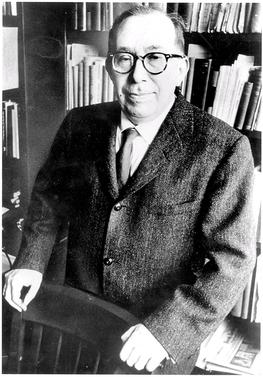 |
| Leo Strauss |
These figures are of more than casual interest to me because I'm working on a third "master" from this era: Leo Strauss. Strauss is obviously different from Rand and Hubbard in important ways. He was a more serious thinker than they were (even his fiercest detractors would at least grant that he was more learned). Just as importantly, he neither attained--nor tried to attain--a mass readership, let alone conventional fame (in his lifetime, at least) or fortune. He did, however, lead a tight group of extraordinarily devoted students. And, from very early on, critics of Strauss made note of--and criticized--Strauss's following, arguing that it was a "cult" or a "cabal."
I've always tended to view the circle of students that formed around Strauss as an example of a typical German intellectual formation. The world of early twentieth-century German thought, in which Leo Strauss came of age, was full of such Kreise ("circles"). The poet Stefan George had one. So did Martin Heidegger.**** What was unusual about Strauss is that he (re)produced this very typically German phenomenon in his adoptive country.
But Strauss's circle was unusual in the American academic context. And his American students came to him in the midst of that American academic context, which viewed--and continues to view--his students' devotion to him with often quite fierce suspicion.
Perhaps figures like Hubbard and Rand, and their followings, might provide an alternative context for understanding Strauss's American circle, though I have not yet worked out the most productive way to map the similarities and differences among them...and I certainly don't mean to imply that it is helpful to understand "Straussianism" as a "cult," either literally or metaphorically.
______________________________________________________
* Tony Ortega, the former editor-in-chief of The Village Voice, who has written about Scientology for close to two decades, has written about some of these parallels.
** Thank goodness for blogs!
*** The other relevant difference is that Scientology is deeply secretive and rather brutally litigious. Nevertheless, serious historical work about it is beginning to get produced.
**** In the late '20s and early '30s, first at Marburg and then in Freiburg, Heidegger led a tight group of students who saw him as, in the words of Hannah Arendt (who was one of their number), "the secret king of philosophy." Interestingly, when, in the mid-1960s, a North American organization was formed devoted to Heidegger, it called itself the Heidegger Circle.
Jumat, 13 Mei 2011
Tim's Light Reading (5-13-2011)
1. Beneke and Stephens on Barton and Stewart
Chris Beneke and Randall Stephens discuss "The Daily Show's Limits" in a May 10, 2011 Christian Century article. Here's the opening one-third of the piece (bolds mine):
"Open conversation that leads to nothing."
That's how Jon Stewart summed up his interview with popular right-wing historian David Barton. He was right. After 30 minutes of glib back-and-forth with Barton (ten of which made it onto TV), Stewart was flummoxed, worn down, unfunny:
As the air left the room, the conversation exposed the gaping ideological divide between Americans--and the challenges we face in bridging it.
Conservatives who go on the Daily Show usually end up looking the fool. But Stewart met his match in Barton, an ideological warrior revered by Glenn Beck and Mike Huckabee. Stewart's razor wit and trademark blue index cards were no match for Barton's prodigious memory and unwavering insistence that America's Christian founding has been erased by secular elites.
The show's staff probably thought Barton could be caricatured as a half-crazed ideologue, unconcerned with larger inconvenient truths. Perhaps they figured that a few well-chosen facts that don't fit his God-and-country narrative would render him speechless, that he would crumble under the relentless ironic jabs. But if it were just a matter of enumerating quotations and dates, members of Congress wouldn't be calling Barton to provide them with the founders' views on deficits, stem cell research and stimulus programs. Barton offers his listeners something much more alluring.
One thing we learned from Stewart's tête-à-tête with Barton is that anecdote-ridden claims can't be countered with more anecdotes. What Stewart never articulated was the essential function of history--using the preponderance of evidence to provide a credible context for understanding the past and the present. Barton presents himself as the high priest of founding texts and the arbiter of honest truth.
If you're interested in a thorough debunking of Barton's claims as made on The Daily Show, read through John Fea's series at The Way of Improvement Leads Home.
2. PhilPapers Notes: Two Forthcoming Articles of Interest (with abstracts)
(a) D. Howard (forthcoming). "Why Study the History of Political Thought?" Philosophy and Social Criticism.
This article explains why its author has spent much of the past decade rediscovering the history of political thought (rather than enter into the fray of political philosophy as it has been practised since Rawls). The article is only an illustration; but its virtue is that it summarizes in a short space the thesis developed in my book The Primacy of the Political: A History of Political Thought from the Greeks to the American and French Revolutions . It lays out a general theory of the political, demonstrates that there exists an inherent anti-political tendency within all politics (as seen in the rise of 20 th-century totalitarianism), and tries to suggest how this difficulty can be confronted.
(b) Melinda Rosenberg (forthcoming). "Principled Autonomy and Plagiarism." Journal of Academic Ethics.
Every semester, professors in every discipline are burdened with the task of checking for plagiarized papers. Since plagiarism has become rampant in the university, it can be argued that devoting time to checking for plagiarism is nothing more than a fool’s errand. Students will continue to plagiarize regardless of the consequences. In this paper, I will argue that professors do have a categorically binding obligation to confirm whether papers have been plagiarized. I will use Onora O'Neill’s account of principled autonomy as the foundation for my argument. Moral agents can only act on principles that can be adopted by all. Dishonesty cannot be adopted since honesty would cease to exist. Furthermore, failing to check for plagiarized papers is a failure to treat all students and professors and ends-in-themselves.
3. Movie Audiences Yawned at Atlas Shrugged
Producer John Aglialoro was dismayed at reviews of his feature film take on Ayn Rand's Atlas Shrugged. Scott McLemee also didn't like the film. Here's an excerpt from his review (bolds mine):
The full course of Randian thought-reform is itself quite demanding, however. Most conversions to Rand’s worldview prove halfhearted. Many are called, but few are Galtian. The world, or at least the United States, is full of people who remember the novels fondly, and vote Republican, while otherwise falling short of the glory. Rand would have scorned them. She was good at scorn, and hardcore Objectivists get a lot of practice at it as well.
But her fans -- as distinct from her followers, sometimes called Randroids, though never by each other -- form the real constituency for the "Atlas Shrugged" movie now in theaters. It is only the first of two or three parts. Whether the project will be finished appears to be a matter of debate among the moviemakers themselves. Clearly, though, it's going over well with its intended market, to judge by the Twitterchat hailing it as one of the great films of all time. And when I saw it in New York this weekend, the audience clapped at the end, as the credits began to roll.
By that point, my capacity for disbelief had been tested quite enough for one evening; the applause seemed one challenge to it too many. The problem with this incarnation of Atlas Shrugged is not ideology but competence. The film looks cheap. Its cinematography is at roughly the level of a TV show from the 1980s. Rand’s plot is almost operatic in its indifference to plausibility, but none of the cast is up to the challenge.
4. "Cunning Forces Are Seeking To Bend History To Their Will"
The NYT's Kate Kernike speculates on "The Persistence of Conspiracy Theories" in this 4/30 article. Here are some highlights from the piece (bolds and links mine):
[Conspiracy theories] have a long history in the United States and elsewhere, coming from left and right, covering all sorts of subjects, political and otherworldly (the twin towers were not hit by airplanes; Paul is dead). And those who doubt Mr. Obama’s citizenship fit the mold of other conspiracy theorists: they don’t lose their grip on their beliefs easily, if at all.
“It almost becomes an article of faith, and as with any theological belief, you can’t confront it with facts,” said Kenneth D. Kitts, a professor of political science at the University of North Carolina at Pembroke who has written extensively about presidential commissions that looked into events that have generated some of the biggest conspiracy theories of the last century — the attack on Pearl Harbor and the assassination of John F. Kennedy, among others. ...
Eighty percent of Americans, he said, believe that President Kennedy was killed by a conspiracy, rather than a lone gunman, as a government commission affirmed. Thirty percent believe that the government covered up aliens’ landing in Roswell, N.M., and a third of American blacks believe that government scientists created AIDS as a weapon of black genocide. ...
By definition, Professor Goldberg said, a conspiracy theory is a belief that cunning forces are seeking to bend history to their will, provoking terror attacks or economic calamity to move the world in the direction they wish. ...
The strong embrace of conspiracy theories is also embedded in the American experience. A fear of enemies — real and imagined, internal and external — defined those who forged this country. A place created as God’s country was bound to see the subversions of Satan behind every uncertain turn.
As Professor Goldberg writes in an encyclopedia, Conspiracy Theories in American History: “Conspiracy theory draws power by merging with and reinforcing traditional American values and beliefs: a sense of mission, Protestant supremacy, concerns about encroachments on liberty, anti-elitism, maintenance of the racial order, and the sanctity of private property.”
Again, this is a great article. Read it all here. - TL
Chris Beneke and Randall Stephens discuss "The Daily Show's Limits" in a May 10, 2011 Christian Century article. Here's the opening one-third of the piece (bolds mine):
"Open conversation that leads to nothing."
That's how Jon Stewart summed up his interview with popular right-wing historian David Barton. He was right. After 30 minutes of glib back-and-forth with Barton (ten of which made it onto TV), Stewart was flummoxed, worn down, unfunny:
As the air left the room, the conversation exposed the gaping ideological divide between Americans--and the challenges we face in bridging it.
Conservatives who go on the Daily Show usually end up looking the fool. But Stewart met his match in Barton, an ideological warrior revered by Glenn Beck and Mike Huckabee. Stewart's razor wit and trademark blue index cards were no match for Barton's prodigious memory and unwavering insistence that America's Christian founding has been erased by secular elites.
The show's staff probably thought Barton could be caricatured as a half-crazed ideologue, unconcerned with larger inconvenient truths. Perhaps they figured that a few well-chosen facts that don't fit his God-and-country narrative would render him speechless, that he would crumble under the relentless ironic jabs. But if it were just a matter of enumerating quotations and dates, members of Congress wouldn't be calling Barton to provide them with the founders' views on deficits, stem cell research and stimulus programs. Barton offers his listeners something much more alluring.
One thing we learned from Stewart's tête-à-tête with Barton is that anecdote-ridden claims can't be countered with more anecdotes. What Stewart never articulated was the essential function of history--using the preponderance of evidence to provide a credible context for understanding the past and the present. Barton presents himself as the high priest of founding texts and the arbiter of honest truth.
If you're interested in a thorough debunking of Barton's claims as made on The Daily Show, read through John Fea's series at The Way of Improvement Leads Home.
2. PhilPapers Notes: Two Forthcoming Articles of Interest (with abstracts)
(a) D. Howard (forthcoming). "Why Study the History of Political Thought?" Philosophy and Social Criticism.
This article explains why its author has spent much of the past decade rediscovering the history of political thought (rather than enter into the fray of political philosophy as it has been practised since Rawls). The article is only an illustration; but its virtue is that it summarizes in a short space the thesis developed in my book The Primacy of the Political: A History of Political Thought from the Greeks to the American and French Revolutions . It lays out a general theory of the political, demonstrates that there exists an inherent anti-political tendency within all politics (as seen in the rise of 20 th-century totalitarianism), and tries to suggest how this difficulty can be confronted.
(b) Melinda Rosenberg (forthcoming). "Principled Autonomy and Plagiarism." Journal of Academic Ethics.
Every semester, professors in every discipline are burdened with the task of checking for plagiarized papers. Since plagiarism has become rampant in the university, it can be argued that devoting time to checking for plagiarism is nothing more than a fool’s errand. Students will continue to plagiarize regardless of the consequences. In this paper, I will argue that professors do have a categorically binding obligation to confirm whether papers have been plagiarized. I will use Onora O'Neill’s account of principled autonomy as the foundation for my argument. Moral agents can only act on principles that can be adopted by all. Dishonesty cannot be adopted since honesty would cease to exist. Furthermore, failing to check for plagiarized papers is a failure to treat all students and professors and ends-in-themselves.
3. Movie Audiences Yawned at Atlas Shrugged
Producer John Aglialoro was dismayed at reviews of his feature film take on Ayn Rand's Atlas Shrugged. Scott McLemee also didn't like the film. Here's an excerpt from his review (bolds mine):
The full course of Randian thought-reform is itself quite demanding, however. Most conversions to Rand’s worldview prove halfhearted. Many are called, but few are Galtian. The world, or at least the United States, is full of people who remember the novels fondly, and vote Republican, while otherwise falling short of the glory. Rand would have scorned them. She was good at scorn, and hardcore Objectivists get a lot of practice at it as well.
But her fans -- as distinct from her followers, sometimes called Randroids, though never by each other -- form the real constituency for the "Atlas Shrugged" movie now in theaters. It is only the first of two or three parts. Whether the project will be finished appears to be a matter of debate among the moviemakers themselves. Clearly, though, it's going over well with its intended market, to judge by the Twitterchat hailing it as one of the great films of all time. And when I saw it in New York this weekend, the audience clapped at the end, as the credits began to roll.
By that point, my capacity for disbelief had been tested quite enough for one evening; the applause seemed one challenge to it too many. The problem with this incarnation of Atlas Shrugged is not ideology but competence. The film looks cheap. Its cinematography is at roughly the level of a TV show from the 1980s. Rand’s plot is almost operatic in its indifference to plausibility, but none of the cast is up to the challenge.
4. "Cunning Forces Are Seeking To Bend History To Their Will"
The NYT's Kate Kernike speculates on "The Persistence of Conspiracy Theories" in this 4/30 article. Here are some highlights from the piece (bolds and links mine):
[Conspiracy theories] have a long history in the United States and elsewhere, coming from left and right, covering all sorts of subjects, political and otherworldly (the twin towers were not hit by airplanes; Paul is dead). And those who doubt Mr. Obama’s citizenship fit the mold of other conspiracy theorists: they don’t lose their grip on their beliefs easily, if at all.
“It almost becomes an article of faith, and as with any theological belief, you can’t confront it with facts,” said Kenneth D. Kitts, a professor of political science at the University of North Carolina at Pembroke who has written extensively about presidential commissions that looked into events that have generated some of the biggest conspiracy theories of the last century — the attack on Pearl Harbor and the assassination of John F. Kennedy, among others. ...
Eighty percent of Americans, he said, believe that President Kennedy was killed by a conspiracy, rather than a lone gunman, as a government commission affirmed. Thirty percent believe that the government covered up aliens’ landing in Roswell, N.M., and a third of American blacks believe that government scientists created AIDS as a weapon of black genocide. ...
By definition, Professor Goldberg said, a conspiracy theory is a belief that cunning forces are seeking to bend history to their will, provoking terror attacks or economic calamity to move the world in the direction they wish. ...
The strong embrace of conspiracy theories is also embedded in the American experience. A fear of enemies — real and imagined, internal and external — defined those who forged this country. A place created as God’s country was bound to see the subversions of Satan behind every uncertain turn.
As Professor Goldberg writes in an encyclopedia, Conspiracy Theories in American History: “Conspiracy theory draws power by merging with and reinforcing traditional American values and beliefs: a sense of mission, Protestant supremacy, concerns about encroachments on liberty, anti-elitism, maintenance of the racial order, and the sanctity of private property.”
Again, this is a great article. Read it all here. - TL
Tim's Light Reading (5-13-2011)
1. Beneke and Stephens on Barton and Stewart
Chris Beneke and Randall Stephens discuss "The Daily Show's Limits" in a May 10, 2011 Christian Century article. Here's the opening one-third of the piece (bolds mine):
"Open conversation that leads to nothing."
That's how Jon Stewart summed up his interview with popular right-wing historian David Barton. He was right. After 30 minutes of glib back-and-forth with Barton (ten of which made it onto TV), Stewart was flummoxed, worn down, unfunny:
As the air left the room, the conversation exposed the gaping ideological divide between Americans--and the challenges we face in bridging it.
Conservatives who go on the Daily Show usually end up looking the fool. But Stewart met his match in Barton, an ideological warrior revered by Glenn Beck and Mike Huckabee. Stewart's razor wit and trademark blue index cards were no match for Barton's prodigious memory and unwavering insistence that America's Christian founding has been erased by secular elites.
The show's staff probably thought Barton could be caricatured as a half-crazed ideologue, unconcerned with larger inconvenient truths. Perhaps they figured that a few well-chosen facts that don't fit his God-and-country narrative would render him speechless, that he would crumble under the relentless ironic jabs. But if it were just a matter of enumerating quotations and dates, members of Congress wouldn't be calling Barton to provide them with the founders' views on deficits, stem cell research and stimulus programs. Barton offers his listeners something much more alluring.
One thing we learned from Stewart's tête-à-tête with Barton is that anecdote-ridden claims can't be countered with more anecdotes. What Stewart never articulated was the essential function of history--using the preponderance of evidence to provide a credible context for understanding the past and the present. Barton presents himself as the high priest of founding texts and the arbiter of honest truth.
If you're interested in a thorough debunking of Barton's claims as made on The Daily Show, read through John Fea's series at The Way of Improvement Leads Home.
2. PhilPapers Notes: Two Forthcoming Articles of Interest (with abstracts)
(a) D. Howard (forthcoming). "Why Study the History of Political Thought?" Philosophy and Social Criticism.
This article explains why its author has spent much of the past decade rediscovering the history of political thought (rather than enter into the fray of political philosophy as it has been practised since Rawls). The article is only an illustration; but its virtue is that it summarizes in a short space the thesis developed in my book The Primacy of the Political: A History of Political Thought from the Greeks to the American and French Revolutions . It lays out a general theory of the political, demonstrates that there exists an inherent anti-political tendency within all politics (as seen in the rise of 20 th-century totalitarianism), and tries to suggest how this difficulty can be confronted.
(b) Melinda Rosenberg (forthcoming). "Principled Autonomy and Plagiarism." Journal of Academic Ethics.
Every semester, professors in every discipline are burdened with the task of checking for plagiarized papers. Since plagiarism has become rampant in the university, it can be argued that devoting time to checking for plagiarism is nothing more than a fool’s errand. Students will continue to plagiarize regardless of the consequences. In this paper, I will argue that professors do have a categorically binding obligation to confirm whether papers have been plagiarized. I will use Onora O'Neill’s account of principled autonomy as the foundation for my argument. Moral agents can only act on principles that can be adopted by all. Dishonesty cannot be adopted since honesty would cease to exist. Furthermore, failing to check for plagiarized papers is a failure to treat all students and professors and ends-in-themselves.
3. Movie Audiences Yawned at Atlas Shrugged
Producer John Aglialoro was dismayed at reviews of his feature film take on Ayn Rand's Atlas Shrugged. Scott McLemee also didn't like the film. Here's an excerpt from his review (bolds mine):
The full course of Randian thought-reform is itself quite demanding, however. Most conversions to Rand’s worldview prove halfhearted. Many are called, but few are Galtian. The world, or at least the United States, is full of people who remember the novels fondly, and vote Republican, while otherwise falling short of the glory. Rand would have scorned them. She was good at scorn, and hardcore Objectivists get a lot of practice at it as well.
But her fans -- as distinct from her followers, sometimes called Randroids, though never by each other -- form the real constituency for the "Atlas Shrugged" movie now in theaters. It is only the first of two or three parts. Whether the project will be finished appears to be a matter of debate among the moviemakers themselves. Clearly, though, it's going over well with its intended market, to judge by the Twitterchat hailing it as one of the great films of all time. And when I saw it in New York this weekend, the audience clapped at the end, as the credits began to roll.
By that point, my capacity for disbelief had been tested quite enough for one evening; the applause seemed one challenge to it too many. The problem with this incarnation of Atlas Shrugged is not ideology but competence. The film looks cheap. Its cinematography is at roughly the level of a TV show from the 1980s. Rand’s plot is almost operatic in its indifference to plausibility, but none of the cast is up to the challenge.
4. "Cunning Forces Are Seeking To Bend History To Their Will"
The NYT's Kate Kernike speculates on "The Persistence of Conspiracy Theories" in this 4/30 article. Here are some highlights from the piece (bolds and links mine):
[Conspiracy theories] have a long history in the United States and elsewhere, coming from left and right, covering all sorts of subjects, political and otherworldly (the twin towers were not hit by airplanes; Paul is dead). And those who doubt Mr. Obama’s citizenship fit the mold of other conspiracy theorists: they don’t lose their grip on their beliefs easily, if at all.
“It almost becomes an article of faith, and as with any theological belief, you can’t confront it with facts,” said Kenneth D. Kitts, a professor of political science at the University of North Carolina at Pembroke who has written extensively about presidential commissions that looked into events that have generated some of the biggest conspiracy theories of the last century — the attack on Pearl Harbor and the assassination of John F. Kennedy, among others. ...
Eighty percent of Americans, he said, believe that President Kennedy was killed by a conspiracy, rather than a lone gunman, as a government commission affirmed. Thirty percent believe that the government covered up aliens’ landing in Roswell, N.M., and a third of American blacks believe that government scientists created AIDS as a weapon of black genocide. ...
By definition, Professor Goldberg said, a conspiracy theory is a belief that cunning forces are seeking to bend history to their will, provoking terror attacks or economic calamity to move the world in the direction they wish. ...
The strong embrace of conspiracy theories is also embedded in the American experience. A fear of enemies — real and imagined, internal and external — defined those who forged this country. A place created as God’s country was bound to see the subversions of Satan behind every uncertain turn.
As Professor Goldberg writes in an encyclopedia, Conspiracy Theories in American History: “Conspiracy theory draws power by merging with and reinforcing traditional American values and beliefs: a sense of mission, Protestant supremacy, concerns about encroachments on liberty, anti-elitism, maintenance of the racial order, and the sanctity of private property.”
Again, this is a great article. Read it all here. - TL
Chris Beneke and Randall Stephens discuss "The Daily Show's Limits" in a May 10, 2011 Christian Century article. Here's the opening one-third of the piece (bolds mine):
"Open conversation that leads to nothing."
That's how Jon Stewart summed up his interview with popular right-wing historian David Barton. He was right. After 30 minutes of glib back-and-forth with Barton (ten of which made it onto TV), Stewart was flummoxed, worn down, unfunny:
As the air left the room, the conversation exposed the gaping ideological divide between Americans--and the challenges we face in bridging it.
Conservatives who go on the Daily Show usually end up looking the fool. But Stewart met his match in Barton, an ideological warrior revered by Glenn Beck and Mike Huckabee. Stewart's razor wit and trademark blue index cards were no match for Barton's prodigious memory and unwavering insistence that America's Christian founding has been erased by secular elites.
The show's staff probably thought Barton could be caricatured as a half-crazed ideologue, unconcerned with larger inconvenient truths. Perhaps they figured that a few well-chosen facts that don't fit his God-and-country narrative would render him speechless, that he would crumble under the relentless ironic jabs. But if it were just a matter of enumerating quotations and dates, members of Congress wouldn't be calling Barton to provide them with the founders' views on deficits, stem cell research and stimulus programs. Barton offers his listeners something much more alluring.
One thing we learned from Stewart's tête-à-tête with Barton is that anecdote-ridden claims can't be countered with more anecdotes. What Stewart never articulated was the essential function of history--using the preponderance of evidence to provide a credible context for understanding the past and the present. Barton presents himself as the high priest of founding texts and the arbiter of honest truth.
If you're interested in a thorough debunking of Barton's claims as made on The Daily Show, read through John Fea's series at The Way of Improvement Leads Home.
2. PhilPapers Notes: Two Forthcoming Articles of Interest (with abstracts)
(a) D. Howard (forthcoming). "Why Study the History of Political Thought?" Philosophy and Social Criticism.
This article explains why its author has spent much of the past decade rediscovering the history of political thought (rather than enter into the fray of political philosophy as it has been practised since Rawls). The article is only an illustration; but its virtue is that it summarizes in a short space the thesis developed in my book The Primacy of the Political: A History of Political Thought from the Greeks to the American and French Revolutions . It lays out a general theory of the political, demonstrates that there exists an inherent anti-political tendency within all politics (as seen in the rise of 20 th-century totalitarianism), and tries to suggest how this difficulty can be confronted.
(b) Melinda Rosenberg (forthcoming). "Principled Autonomy and Plagiarism." Journal of Academic Ethics.
Every semester, professors in every discipline are burdened with the task of checking for plagiarized papers. Since plagiarism has become rampant in the university, it can be argued that devoting time to checking for plagiarism is nothing more than a fool’s errand. Students will continue to plagiarize regardless of the consequences. In this paper, I will argue that professors do have a categorically binding obligation to confirm whether papers have been plagiarized. I will use Onora O'Neill’s account of principled autonomy as the foundation for my argument. Moral agents can only act on principles that can be adopted by all. Dishonesty cannot be adopted since honesty would cease to exist. Furthermore, failing to check for plagiarized papers is a failure to treat all students and professors and ends-in-themselves.
3. Movie Audiences Yawned at Atlas Shrugged
Producer John Aglialoro was dismayed at reviews of his feature film take on Ayn Rand's Atlas Shrugged. Scott McLemee also didn't like the film. Here's an excerpt from his review (bolds mine):
The full course of Randian thought-reform is itself quite demanding, however. Most conversions to Rand’s worldview prove halfhearted. Many are called, but few are Galtian. The world, or at least the United States, is full of people who remember the novels fondly, and vote Republican, while otherwise falling short of the glory. Rand would have scorned them. She was good at scorn, and hardcore Objectivists get a lot of practice at it as well.
But her fans -- as distinct from her followers, sometimes called Randroids, though never by each other -- form the real constituency for the "Atlas Shrugged" movie now in theaters. It is only the first of two or three parts. Whether the project will be finished appears to be a matter of debate among the moviemakers themselves. Clearly, though, it's going over well with its intended market, to judge by the Twitterchat hailing it as one of the great films of all time. And when I saw it in New York this weekend, the audience clapped at the end, as the credits began to roll.
By that point, my capacity for disbelief had been tested quite enough for one evening; the applause seemed one challenge to it too many. The problem with this incarnation of Atlas Shrugged is not ideology but competence. The film looks cheap. Its cinematography is at roughly the level of a TV show from the 1980s. Rand’s plot is almost operatic in its indifference to plausibility, but none of the cast is up to the challenge.
4. "Cunning Forces Are Seeking To Bend History To Their Will"
The NYT's Kate Kernike speculates on "The Persistence of Conspiracy Theories" in this 4/30 article. Here are some highlights from the piece (bolds and links mine):
[Conspiracy theories] have a long history in the United States and elsewhere, coming from left and right, covering all sorts of subjects, political and otherworldly (the twin towers were not hit by airplanes; Paul is dead). And those who doubt Mr. Obama’s citizenship fit the mold of other conspiracy theorists: they don’t lose their grip on their beliefs easily, if at all.
“It almost becomes an article of faith, and as with any theological belief, you can’t confront it with facts,” said Kenneth D. Kitts, a professor of political science at the University of North Carolina at Pembroke who has written extensively about presidential commissions that looked into events that have generated some of the biggest conspiracy theories of the last century — the attack on Pearl Harbor and the assassination of John F. Kennedy, among others. ...
Eighty percent of Americans, he said, believe that President Kennedy was killed by a conspiracy, rather than a lone gunman, as a government commission affirmed. Thirty percent believe that the government covered up aliens’ landing in Roswell, N.M., and a third of American blacks believe that government scientists created AIDS as a weapon of black genocide. ...
By definition, Professor Goldberg said, a conspiracy theory is a belief that cunning forces are seeking to bend history to their will, provoking terror attacks or economic calamity to move the world in the direction they wish. ...
The strong embrace of conspiracy theories is also embedded in the American experience. A fear of enemies — real and imagined, internal and external — defined those who forged this country. A place created as God’s country was bound to see the subversions of Satan behind every uncertain turn.
As Professor Goldberg writes in an encyclopedia, Conspiracy Theories in American History: “Conspiracy theory draws power by merging with and reinforcing traditional American values and beliefs: a sense of mission, Protestant supremacy, concerns about encroachments on liberty, anti-elitism, maintenance of the racial order, and the sanctity of private property.”
Again, this is a great article. Read it all here. - TL
Rabu, 11 November 2009
O'Connor on Burns's Goddess of the Market
 Review of Jennifer Burns's Goddess of the Market: Ayn Rand and the American Right (Oxford University Press, 2009). ISBN: 978-0-19-532487-7 (hardcover). 384 pp., 9.3 x 6.3 x 1.4.
Review by Mike O'Connor
Georgia State University
As a young, naïve and impressionable college freshman, I fancied myself as sallying forth into the wide world of intellectual discourse, and drank shallowly from a large number of pools. I chanted with a quasi-Buddhist group until they asked me for money, was disappointed in the lack of clarity in the goals of the university socialist organization, and stuck with the chorus for an entire year. But one group whose meetings I did not attend was the Objectivist Society; I found their sign on the campus bulletin board puzzling to the point of being disturbing.
Objectivism is the name that novelist and philosopher Ayn Rand (1905-1982) had given to her body of thought. Rand took a rather exclusionary tone and strident attitude to intellectual discourse, and her campus followers had evidently followed in her footsteps. Rather than offering free pizza or other inducements in the fashion of many such organizations, the Objectivists instead challenged any interested parties to prove their worthiness. Would-be Objectivists were confronted with three fundamental principles that they must accept. First, one must...[Continue here]
O'Connor on Burns's Goddess of the Market
Review of Jennifer Burns's Goddess of the Market: Ayn Rand and the American Right (Oxford University Press, 2009). ISBN: 978-0-19-532487-7 (hardcover). 384 pp., 9.3 x 6.3 x 1.4.Review by Mike O'Connor
Georgia State University
As a young, naïve and impressionable college freshman, I fancied myself as sallying forth into the wide world of intellectual discourse, and drank shallowly from a large number of pools. I chanted with a quasi-Buddhist group until they asked me for money, was disappointed in the lack of clarity in the goals of the university socialist organization, and stuck with the chorus for an entire year. But one group whose meetings I did not attend was the Objectivist Society; I found their sign on the campus bulletin board puzzling to the point of being disturbing.
Objectivism is the name that novelist and philosopher Ayn Rand (1905-1982) had given to her body of thought. Rand took a rather exclusionary tone and strident attitude to intellectual discourse, and her campus followers had evidently followed in her footsteps. Rather than offering free pizza or other inducements in the fashion of many such organizations, the Objectivists instead challenged any interested parties to prove their worthiness. Would-be Objectivists were confronted with three fundamental principles that they must accept. First, one must...[Continue here]
Senin, 02 November 2009
Tim's Light Reading (11/2/09)
1.a. The History of the Idea of Political Correctness: With a hat tip to John Quiggin at Crooked Timber, this old NYT story and the Wikipedia entry for political correctness got me thinking about how a history of the idea in the United States would look. It would seem that no history of the Culture Wars could be written without some accounting of the roots of p.c. But would it begin with the linguistic turn, as Quiggin briefly asserts? Or is it a Left political phenomenon, as some conservative thinkers assert, and the Wikipedia and NYT articles support? And while I've brought up Wikipedia, the early historical sample given there in relation to the U.S. (Chisholm versus Georgia, 1793) seems to confuse political theory with language usage. But maybe this is just a case of more context being needed with quote?
1.b. Related Aside: Philosophy of the History of Ideas: Is it just me, or can you turn anything into a form of intellectual history by giving the topic Platonic-like form/idea status and then claim to talk about its history? If so, then historians of ideas are going to run into the same critical problem Aristotle had with Plato: How many forms are there? And if *everything* has a form (which it appears even Plato did not assert), then isn't it more useful to talk about the specifics of the real object in front of you rather than the idea? But I suppose that kind of materialism is an anti-historical line of thought. I mean, if everything is unique, then there is no history. But this goes against our common sense. Even if the number of forms is not infinite, the pool of them is large enough that there is plenty of material with which to work. Perhaps it's necessary to being a historian that we believe there's an underlying-but-similar essence about which we can discuss change. The issue then becomes a well-worn one: how much change? In any case, it appears that a certain amount of Platonism, combined with the possibility of change, buttresses our attraction to the history of ideas.
2. The Creation of a Neoliberal Audit Culture in Higher Education: Decasia's Eli Thorkelson meditates on how Margaret Spellings' ill-fated effort to control/dictate/reform higher education accountability has led to a voluntary regimen of outcomes assessment over the past few years. To quote the post, this has created a new "neoliberal audit culture" in higher education (the phrase might be from Morten Levin or Cornell University's Davydd Greenwood).
3. Jennifer Burns' Competition: After Jennifer Burns received excellent exposure for her new book on The Daily Show (#6 here), another biography of Ayn Rand is now on the market: Anne C. Heller's Ayn Rand and the World She Made. Here is a review. I like the present-past connections made in Kirsch's review. And Kirsch does mention Burns' effort. Amazon shows the release of Burns' book as Oct. 19 and Weller's as Oct. 27. Our days in the sun do not last long, do they? [BTW: Here is an excellent combined review of Burns' and Heller's books.]
4. Saul Alinsky and Jacques Maritain: About a month ago I learned that Alinsky and the moderate-to-liberal Catholic Thomistic philosopher Maritain maintained correspondence for almost 30 years, from 1945 until Alinsky's death in 1972. This was sort of a "worlds colliding" moment for me. And there's a book about it, no less: Bernard E. Doering's The Philosopher and the Provocateur. I suppose this is a reiteration of a lesson I've learned many times over: Never the let the *reputation* of person's philosophical commitments and social views (whether Left or Right) dictate your assumptions about her/his connections with the rest of the world.
1.b. Related Aside: Philosophy of the History of Ideas: Is it just me, or can you turn anything into a form of intellectual history by giving the topic Platonic-like form/idea status and then claim to talk about its history? If so, then historians of ideas are going to run into the same critical problem Aristotle had with Plato: How many forms are there? And if *everything* has a form (which it appears even Plato did not assert), then isn't it more useful to talk about the specifics of the real object in front of you rather than the idea? But I suppose that kind of materialism is an anti-historical line of thought. I mean, if everything is unique, then there is no history. But this goes against our common sense. Even if the number of forms is not infinite, the pool of them is large enough that there is plenty of material with which to work. Perhaps it's necessary to being a historian that we believe there's an underlying-but-similar essence about which we can discuss change. The issue then becomes a well-worn one: how much change? In any case, it appears that a certain amount of Platonism, combined with the possibility of change, buttresses our attraction to the history of ideas.
2. The Creation of a Neoliberal Audit Culture in Higher Education: Decasia's Eli Thorkelson meditates on how Margaret Spellings' ill-fated effort to control/dictate/reform higher education accountability has led to a voluntary regimen of outcomes assessment over the past few years. To quote the post, this has created a new "neoliberal audit culture" in higher education (the phrase might be from Morten Levin or Cornell University's Davydd Greenwood).
3. Jennifer Burns' Competition: After Jennifer Burns received excellent exposure for her new book on The Daily Show (#6 here), another biography of Ayn Rand is now on the market: Anne C. Heller's Ayn Rand and the World She Made. Here is a review. I like the present-past connections made in Kirsch's review. And Kirsch does mention Burns' effort. Amazon shows the release of Burns' book as Oct. 19 and Weller's as Oct. 27. Our days in the sun do not last long, do they? [BTW: Here is an excellent combined review of Burns' and Heller's books.]
4. Saul Alinsky and Jacques Maritain: About a month ago I learned that Alinsky and the moderate-to-liberal Catholic Thomistic philosopher Maritain maintained correspondence for almost 30 years, from 1945 until Alinsky's death in 1972. This was sort of a "worlds colliding" moment for me. And there's a book about it, no less: Bernard E. Doering's The Philosopher and the Provocateur. I suppose this is a reiteration of a lesson I've learned many times over: Never the let the *reputation* of person's philosophical commitments and social views (whether Left or Right) dictate your assumptions about her/his connections with the rest of the world.
Tim's Light Reading (11/2/09)
1.a. The History of the Idea of Political Correctness: With a hat tip to John Quiggin at Crooked Timber, this old NYT story and the Wikipedia entry for political correctness got me thinking about how a history of the idea in the United States would look. It would seem that no history of the Culture Wars could be written without some accounting of the roots of p.c. But would it begin with the linguistic turn, as Quiggin briefly asserts? Or is it a Left political phenomenon, as some conservative thinkers assert, and the Wikipedia and NYT articles support? And while I've brought up Wikipedia, the early historical sample given there in relation to the U.S. (Chisholm versus Georgia, 1793) seems to confuse political theory with language usage. But maybe this is just a case of more context being needed with quote?
1.b. Related Aside: Philosophy of the History of Ideas: Is it just me, or can you turn anything into a form of intellectual history by giving the topic Platonic-like form/idea status and then claim to talk about its history? If so, then historians of ideas are going to run into the same critical problem Aristotle had with Plato: How many forms are there? And if *everything* has a form (which it appears even Plato did not assert), then isn't it more useful to talk about the specifics of the real object in front of you rather than the idea? But I suppose that kind of materialism is an anti-historical line of thought. I mean, if everything is unique, then there is no history. But this goes against our common sense. Even if the number of forms is not infinite, the pool of them is large enough that there is plenty of material with which to work. Perhaps it's necessary to being a historian that we believe there's an underlying-but-similar essence about which we can discuss change. The issue then becomes a well-worn one: how much change? In any case, it appears that a certain amount of Platonism, combined with the possibility of change, buttresses our attraction to the history of ideas.
2. The Creation of a Neoliberal Audit Culture in Higher Education: Decasia's Eli Thorkelson meditates on how Margaret Spellings' ill-fated effort to control/dictate/reform higher education accountability has led to a voluntary regimen of outcomes assessment over the past few years. To quote the post, this has created a new "neoliberal audit culture" in higher education (the phrase might be from Morten Levin or Cornell University's Davydd Greenwood).
3. Jennifer Burns' Competition: After Jennifer Burns received excellent exposure for her new book on The Daily Show (#6 here), another biography of Ayn Rand is now on the market: Anne C. Heller's Ayn Rand and the World She Made. Here is a review. I like the present-past connections made in Kirsch's review. And Kirsch does mention Burns' effort. Amazon shows the release of Burns' book as Oct. 19 and Weller's as Oct. 27. Our days in the sun do not last long, do they? [BTW: Here is an excellent combined review of Burns' and Heller's books.]
4. Saul Alinsky and Jacques Maritain: About a month ago I learned that Alinsky and the moderate-to-liberal Catholic Thomistic philosopher Maritain maintained correspondence for almost 30 years, from 1945 until Alinsky's death in 1972. This was sort of a "worlds colliding" moment for me. And there's a book about it, no less: Bernard E. Doering's The Philosopher and the Provocateur. I suppose this is a reiteration of a lesson I've learned many times over: Never the let the *reputation* of person's philosophical commitments and social views (whether Left or Right) dictate your assumptions about her/his connections with the rest of the world.
1.b. Related Aside: Philosophy of the History of Ideas: Is it just me, or can you turn anything into a form of intellectual history by giving the topic Platonic-like form/idea status and then claim to talk about its history? If so, then historians of ideas are going to run into the same critical problem Aristotle had with Plato: How many forms are there? And if *everything* has a form (which it appears even Plato did not assert), then isn't it more useful to talk about the specifics of the real object in front of you rather than the idea? But I suppose that kind of materialism is an anti-historical line of thought. I mean, if everything is unique, then there is no history. But this goes against our common sense. Even if the number of forms is not infinite, the pool of them is large enough that there is plenty of material with which to work. Perhaps it's necessary to being a historian that we believe there's an underlying-but-similar essence about which we can discuss change. The issue then becomes a well-worn one: how much change? In any case, it appears that a certain amount of Platonism, combined with the possibility of change, buttresses our attraction to the history of ideas.
2. The Creation of a Neoliberal Audit Culture in Higher Education: Decasia's Eli Thorkelson meditates on how Margaret Spellings' ill-fated effort to control/dictate/reform higher education accountability has led to a voluntary regimen of outcomes assessment over the past few years. To quote the post, this has created a new "neoliberal audit culture" in higher education (the phrase might be from Morten Levin or Cornell University's Davydd Greenwood).
3. Jennifer Burns' Competition: After Jennifer Burns received excellent exposure for her new book on The Daily Show (#6 here), another biography of Ayn Rand is now on the market: Anne C. Heller's Ayn Rand and the World She Made. Here is a review. I like the present-past connections made in Kirsch's review. And Kirsch does mention Burns' effort. Amazon shows the release of Burns' book as Oct. 19 and Weller's as Oct. 27. Our days in the sun do not last long, do they? [BTW: Here is an excellent combined review of Burns' and Heller's books.]
4. Saul Alinsky and Jacques Maritain: About a month ago I learned that Alinsky and the moderate-to-liberal Catholic Thomistic philosopher Maritain maintained correspondence for almost 30 years, from 1945 until Alinsky's death in 1972. This was sort of a "worlds colliding" moment for me. And there's a book about it, no less: Bernard E. Doering's The Philosopher and the Provocateur. I suppose this is a reiteration of a lesson I've learned many times over: Never the let the *reputation* of person's philosophical commitments and social views (whether Left or Right) dictate your assumptions about her/his connections with the rest of the world.
Langganan:
Postingan (Atom)